Metro Phoenix / Communities / Phoenix
City of Phoenix Overview
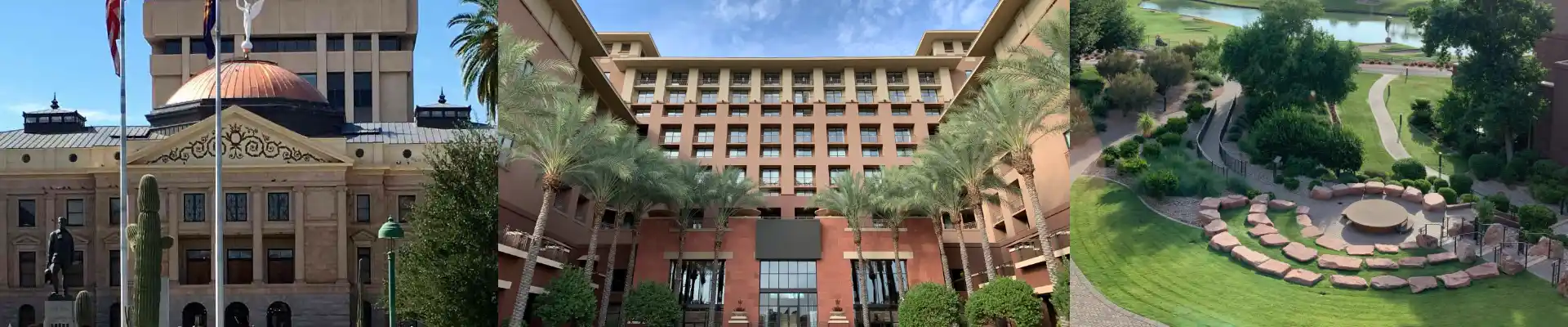
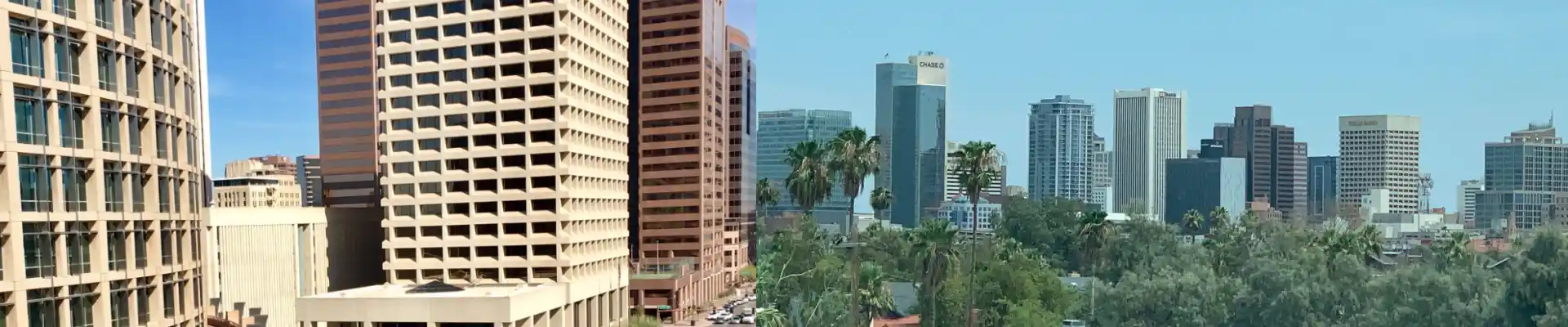
The City of Phoenix is home to more than 1.6 million residents and anchors one of the nation’s fastest-growing economies and job markets. As Arizona’s capital city, Phoenix serves as the state’s center for business, finance, culture, and government operations.
Phoenix continues to advance a strategic economic development plan focused on building a diverse and resilient economy. The city supports job creation and economic opportunity by helping existing companies expand, attracting foreign direct investment, and supporting emerging technology and advanced manufacturing industries. Phoenix also encourages the growth and retention of small- and mid-sized businesses, especially in innovation, technology, business services, and bioscience sectors.
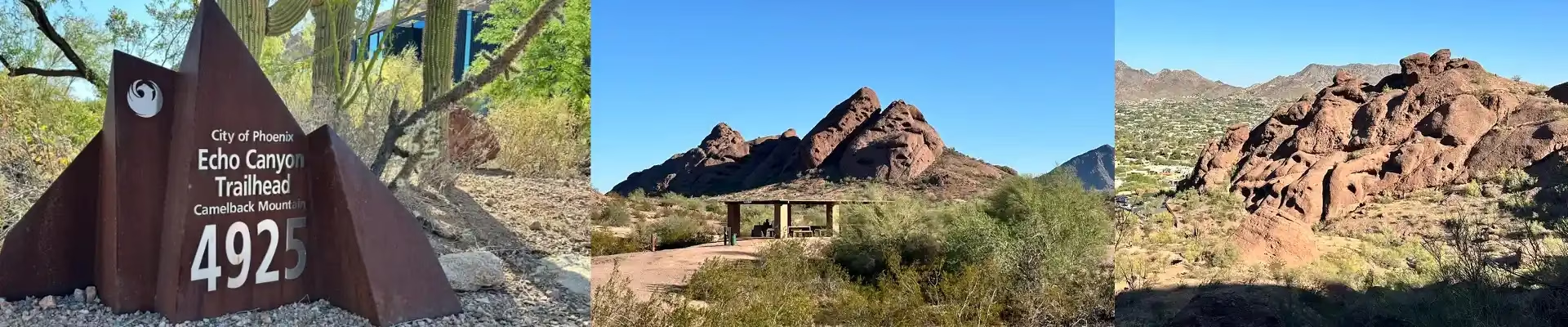
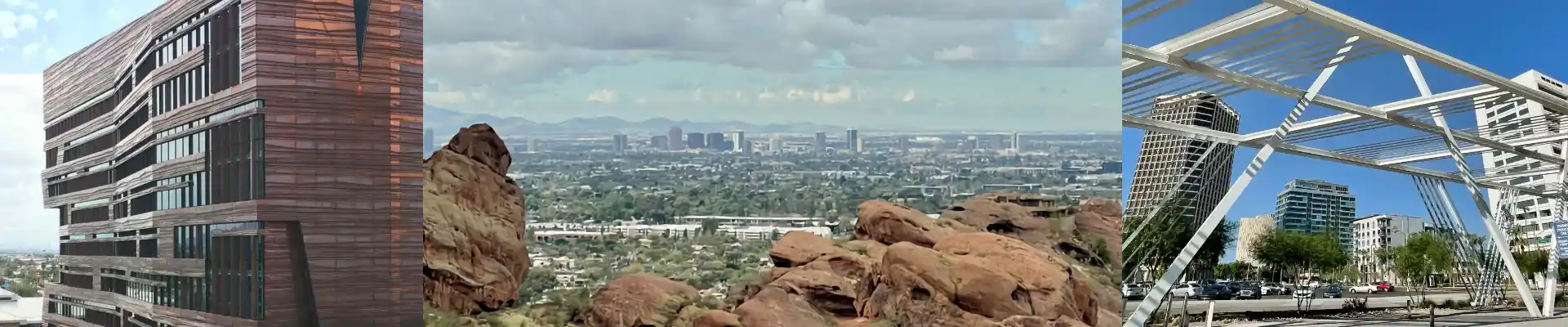
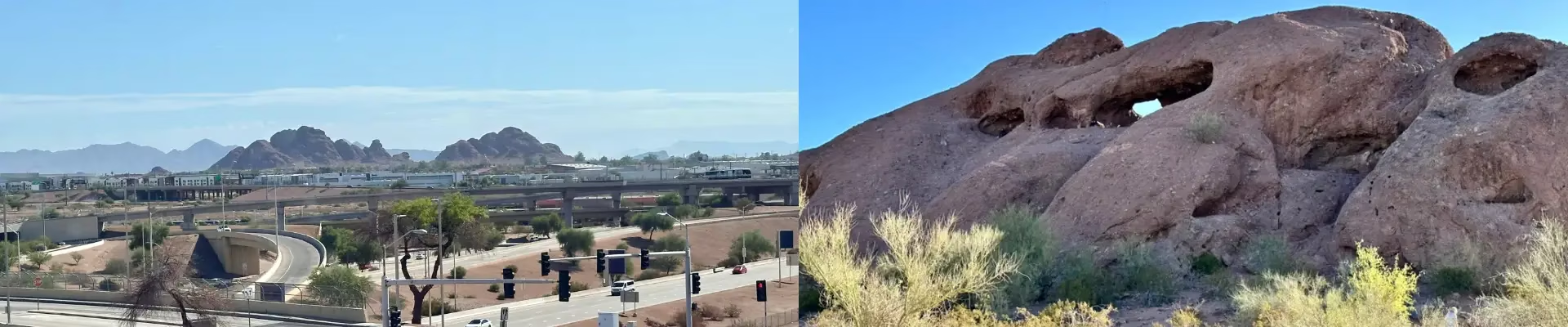
The Phoenix Mountains Preserve currently spans over 38,000 acres and includes North Mountain, Camelback Mountain, Piestewa Peak, Phoenix Sonoran Preserve, and South Mountain Park. According to the City of Phoenix, there are plans to acquire additional acreage in the future as the number of visitors and Phoenicians increase. Camelback Mountain is regularly ranked as one of the nation’s top hiking destinations.


History
An Ancient Civilization
Long before cities rose across the eastern United States, an advanced civilization thrived in the area now known as Phoenix. The Pueblo Grande Museum and Archaeological Park preserves the ruins of this ancient community, which occupied the region from about 700 to 1400 A.D.
Early residents transformed the desert by building nearly 135 miles of irrigation canals. Their engineering efforts turned the Valley into productive farmland. Historians still debate why the civilization disappeared, though many believe a prolonged drought forced them to leave. Native groups later referred to the vanished canal builders as the “Ho Ho Kam,” meaning “the people who have gone.”
Incorporation and Growth
Modern Phoenix began taking shape during the late 1800s. The city officially incorporated in 1881 with a population of roughly 2,500 residents. In 1887, Phoenix launched its first horse-drawn streetcar line along Washington and Center Streets. The system later expanded throughout the city and into Glendale.
The arrival of the Southern Pacific Railroad on July 4, 1887, transformed the local economy. Rail transportation replaced wagons and accelerated trade, commerce, and regional growth. That momentum led community leaders to establish the Phoenix Chamber of Commerce in 1888. Phoenix also opened a new City Hall that year. The building temporarily housed Arizona’s territorial government after officials moved the capital from Prescott to Phoenix in 1889.
In 1902, President Theodore Roosevelt signed the National Reclamation Act, opening the door for large-scale dam construction across the West. Local residents responded by forming the Salt River Valley Water Users’ Association in 1903 to manage regional water resources. Construction on the Theodore Roosevelt Dam began in 1906. The dam became the nation’s first multi-purpose project under the Act, supplying both water and electricity. Roosevelt dedicated the dam in 1911, helping revolutionize farming across the Valley. Arizona achieved statehood shortly afterward on February 14, 1912.
Agriculture to Industry
By the 1940s, Phoenix shifted from an agriculture-based economy to an emerging industrial center. World War II military activity fueled much of that growth. Bases such as Luke Air Force Base, Williams Field, and Falcon Field brought thousands of servicemembers to the region. Small industries expanded to support wartime demand. After the war, many veterans returned with their families, strengthening the labor force and attracting private investment and large employers. Phoenix gradually moved beyond agriculture and entered a new era of industrial growth and economic expansion. By 1950, the city’s population had surpassed 100,000 residents.
Since 1950, Phoenix has experienced extraordinary growth. The city expanded from 17 square miles and roughly 106,000 residents to more than 500 square miles and approximately 1.6 million people. Today, Phoenix ranks among the nation’s largest cities and serves as a major corporate, industrial, and economic center in the Southwest. Despite rapid development, the city has preserved its strong community identity while balancing historic preservation with modernization and regional growth.
City Government
Phoenix operates under a council-manager form of government built around three primary leadership roles: the mayor, city council members, and the city manager.
The City Council includes the mayor and eight council members. Each council member represents a specific district and voters from that district elect them to office.
Residents across the entire city elect the mayor. The mayor leads council meetings and serves as Phoenix’s chief public representative and civic leader.
Business
Economic Development and Diversification
The economic development strategy of the City of Phoenix focuses on retaining and growing small- and medium-sized businesses, especially those in technology, innovation, finance, and bio-sciences. Here are some key business and economic factors for the City of Phoenix:
Phoenix has a well-rounded economy, moving beyond its historical reliance on real estate and construction to include sectors like technology, finance, and healthcare. The city’s steady and diverse economic expansion has attracted both established businesses and new entrepreneurs, making it the center of one of the fastest-growing metropolitan areas in the nation.
Technology and Innovation
The city has become an attractive destination for technology companies, including those in software development, data centers, and cybersecurity. This is due in part to its combination of a skilled workforce, relatively low operational costs, supportive business environment, and a growing innovation ecosystem. Phoenix has developed a robust, tech-focused infrastructure, incorporating fiber-optic networks to support the high-speed data transmission and sophisticated communication requirements of technology-driven businesses.
Renewable Energy and Sustainability
The abundance of sunshine makes Phoenix a strong base for solar energy companies and renewable energy initiatives, attracting businesses committed to sustainability. Phoenix also promotes sustainable practices, incentivizing green building and water conservation, which appeals to environmentally conscious businesses and residents.
Healthcare and Bioscience
Major healthcare providers like Banner Health, Dignity Health, and Mayo Clinic support a thriving healthcare industry, catering to a growing population with increasing healthcare needs. With investments in life sciences and biomedical research facilities, Phoenix is attracting companies in pharmaceuticals, biotech, and medical devices, positioning itself as a growing community for healthcare innovation.
Data Centers and Infrastructure
Phoenix’s dry climate, relatively low risk of natural disasters, and affordable energy costs make it an ideal location for data centers. Companies like Apple and Microsoft have chosen Phoenix for their data storage and cloud facilities. The city has invested in tech-friendly infrastructure, including fiber-optic networks, making it conducive to advanced data and communication needs of tech companies. This advanced infrastructure creates an ideal environment for companies with demanding data needs.
Tourism and Hospitality
With its climate, golf courses, luxury resorts, and scenic desert landscapes, Phoenix attracts millions of visitors each year, supporting a robust hospitality and tourism industry. Downtown Phoenix hosts major sports venues, including the Mortgage Matchup Center (home to the Phoenix Suns) and Chase Field (home to the Arizona Diamondbacks). These teams and venues bring fans and create demand for pre- and post-game dining and entertainment.
Real Estate and Construction
With a booming construction sector driven by population growth, Phoenix has a high demand for both residential and commercial real estate. This continues to fuel the construction industry. As of recent estimates, around 25% of Phoenix’s total land area (over 500 square miles) remains undeveloped or vacant, which includes open spaces and land zoned for future development.
Transportation
Major Streets and Freeways
Phoenix uses a highly organized street grid that makes navigation simple and efficient. Major roads follow a clear north-south and east-west layout. Most blocks remain uniform in size, while major streets typically sit one mile apart, creating a predictable traffic pattern across the city.
As Phoenix expanded, the grid system expanded with it. Large blocks and mile-wide spacing between major roads supported steady suburban growth to the north, south, east, and west without disrupting the city’s original design. Today, an extensive freeway and transportation network connects Phoenix throughout Metro Phoenix and the Southwest.
Interstate 10 (I-10) serves as Phoenix’s primary east-west freeway. The corridor connects the city to Los Angeles on the west and Tucson to the southeast.
Interstate 17 (I-17) operates as a major north-south highway linking Phoenix to Flagstaff and Northern Arizona. In Flagstaff, the route connects with Interstate 40, a major transcontinental highway.
Central Avenue stands as Phoenix’s historic main street and primary north-south corridor. The roadway divides much of Phoenix and the broader metro area into east and west sections. Streets generally lie east of Central Avenue, while avenues sit to the west.
Grand Avenue (U.S. Route 60/State Route 93) runs diagonally northwest from Downtown Phoenix toward Glendale. The corridor provides an alternative route through northwest Metro Phoenix while supporting industrial and commercial development.
Public Transit
Valley Metro Rail connects Phoenix with Tempe and Mesa through a growing light rail system. The line gives residents and visitors convenient access to Downtown Phoenix, Arizona State University, and East Valley destinations. PHX Sky Train links terminals and facilities at Phoenix Sky Harbor International Airport while connecting travelers to light rail, ride-share services, parking garages, and the rental car center.
Phoenix Sky Harbor International Airport (PHX) ranks as Arizona’s busiest airport and serves more than 40 million passengers each year. The airport consistently ranks among the 10 busiest airports in the United States and offers multiple terminals, extensive amenities, and direct transportation connections through the PHX Sky Train system.

2023 Population (estimate)
City of Phoenix: 1,694,380
Arizona: 7,427,991
Median Household Income (2022)
City of Phoenix: $75,969
Arizona: $74,568
Estimated Home Value (2024)
City of Phoenix: $440,220
Arizona: $433,271
Median Age (2022)
City of Phoenix: 35.1
Arizona: 38.6
Land area: 474.9 square miles
Population density:
3,463 people per square mile

Discovery Oasis
120-acre urban destination for commercial, research and lab development. The district will accompany the adjacent Mayo Clinic campus and ASU’s Health Futures Center and include a mix of research and development, biomanufacturing, education, and medical buildings coupled with a public realm that will enhance the quality of space.