Metro Phoenix / Communities / Paradise Valley
Paradise Valley Overview
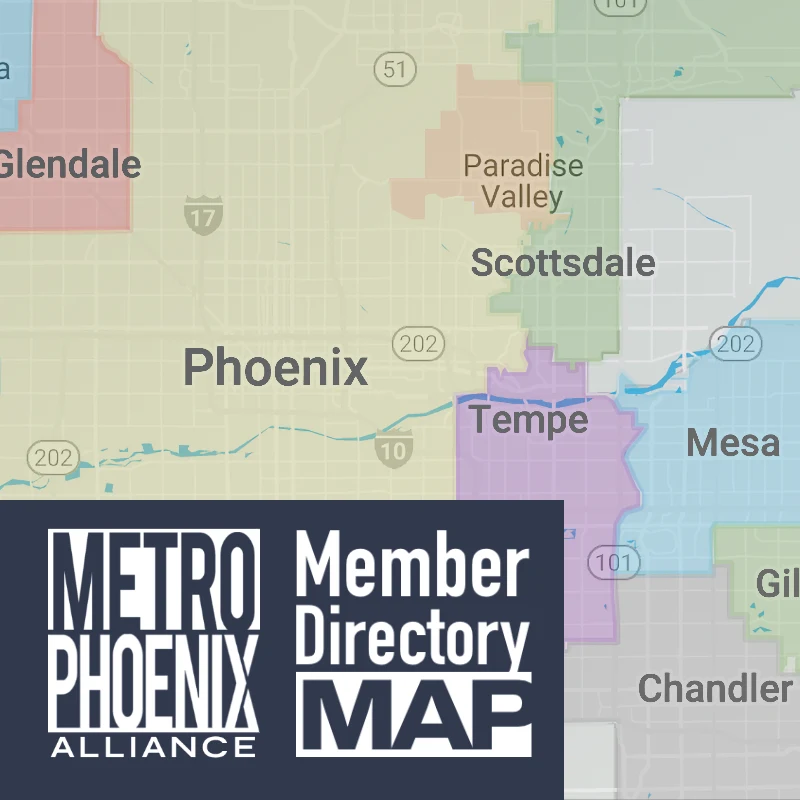
Nestled in the heart of Metro Phoenix, between Phoenix and Scottsdale, Paradise Valley earned its name in 1889 when surveyors were captivated by the serene beauty of its mountains and desert landscape. The town was officially incorporated in 1961, driven by residents’ desire to maintain low-density zoning, with a minimum of one acre per home, and to preserve the area as a primarily residential community with minimal government oversight. Over the years, the residents of Paradise Valley have remained committed to this founding vision, striving to uphold the town’s unique character and tranquil atmosphere.
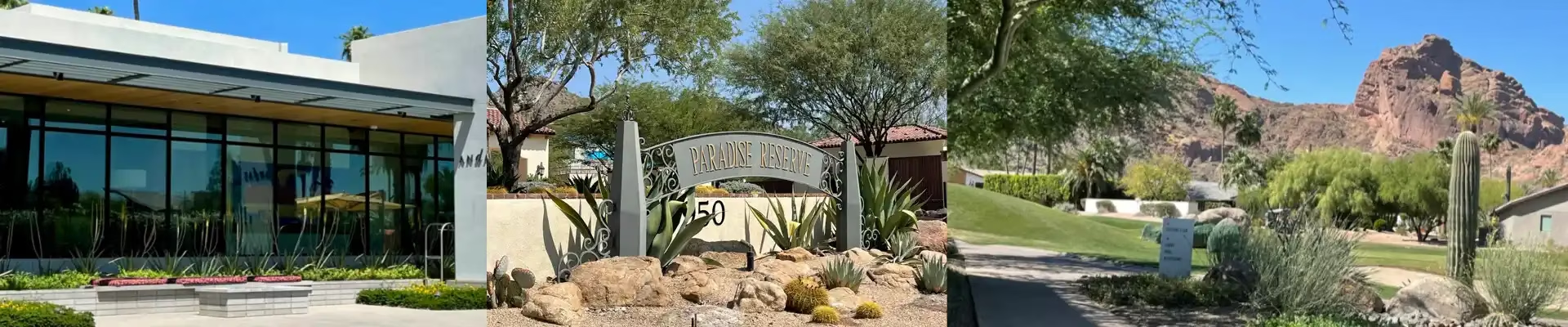
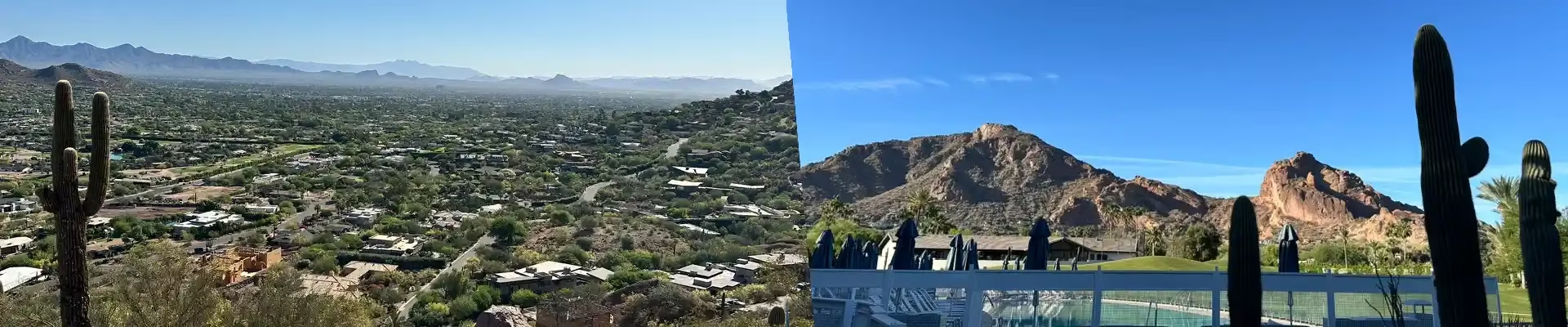
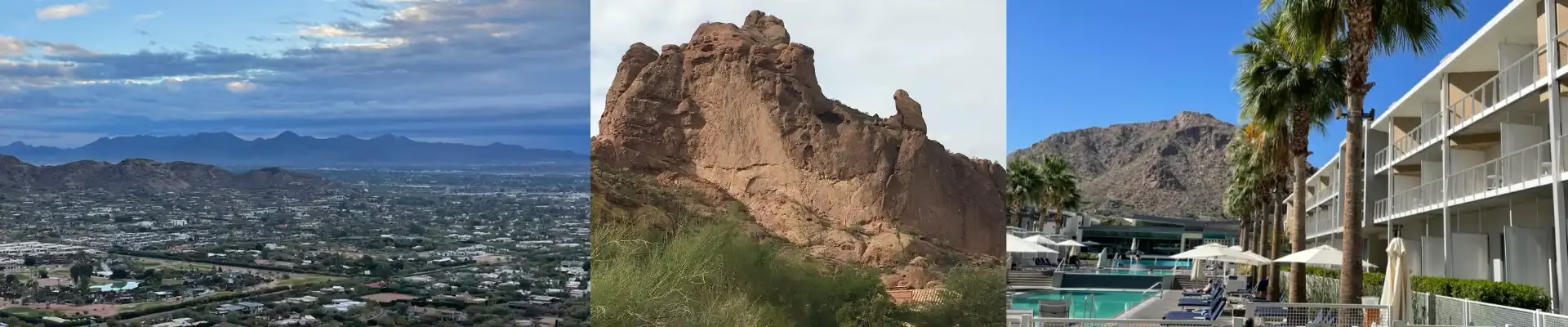
The Town of Paradise Valley offers easy access to recreation, biking, and hiking trails within the Phoenix Mountains Preserve, Mummy Mountain, and Camelback Mountain.
History
The area now known as Paradise Valley served primarily as open cattle grazing land during the late 1800s, framed by the McDowell Mountains to the east and Camelback Mountain to the south. In the 1880s, the Rio Verde Canal Company introduced irrigation, transforming the desert into productive farmland. Then, in 1889, three company surveyors were so impressed by the area’s natural beauty and peaceful setting that they named it Paradise Valley.
Although the area remained largely undeveloped for decades, growth began after World War II. Even then, Paradise Valley retained its quiet, rural character with few businesses and spacious residential properties. By the late 1950s, however, the neighboring cities of Phoenix and Scottsdale sought to annex the area. In response, local residents organized to protect their community from higher-density development, increased zoning regulations, and rising property taxes. They formed a citizens committee, gathered signatures, and petitioned for incorporation to preserve large-lot zoning, maintain a strictly residential community, and limit government oversight. Their efforts succeeded when the Maricopa County Board of Supervisors approved the petition, and Paradise Valley officially incorporated on May 24, 1961, securing the town’s rural charm and low-density character for future generations.
City Government
Paradise Valley operates under a council-manager form of government. Voters elect a mayor and six at-large Town Council members to represent the community. In turn, the Town Council appoints the town manager, town attorney, and presiding judge to oversee daily operations and legal affairs.
The town elects its mayor to a two-year term, while council members serve staggered four-year terms to provide continuity in leadership. After each election, the mayor and council choose a vice mayor from among the council members. Unlike most municipalities, Paradise Valley does not compensate its elected officials. Instead, the mayor, vice mayor, and council members volunteer their time and serve the community without salary or financial benefits.
Business
Resorts and Spas: Paradise Valley is home to several world-class resorts, spas, and wellness retreats, including the Sanctuary Camelback Mountain and the JW Marriott Camelback Inn. These destinations attract high-net-worth visitors looking for high-end luxury experiences.
Aesthetic and Wellness Services: Paradise Valley’s population includes a high proportion of affluent individuals interested in high-quality healthcare, wellness, and aesthetic services. The health-conscious community supports businesses like fitness centers, personal training services, yoga studios, and wellness coaching.
Professional Services: Strong demand exists for wealth management, private banking, legal advisory, and financial planning services. Firms offering bespoke, concierge-level services for affluent clients can thrive in this market. Paradise Valley residents often include business owners and executives who benefit from niche consulting, strategic advisory services, and investment consulting, creating opportunities for specialized B2B services.
Transportation
Paradise Valley is centrally located and is well-connected to bordering cities, Scottsdale and Phoenix.
State Route 51 (Piestewa Freeway): Located just west of Paradise Valley, SR-51 provides a major north-south connection through Phoenix, offering quick access to Downtown Phoenix, Sky Harbor International Airport, and other important destinations.
Scottsdale Road: Main arterial north-south road for Paradise Valley residents.
Lincoln Drive: East-west road, connecting to Scottsdale and Phoenix. It serves as the main artery for local traffic within Paradise Valley, connecting to Tatum Boulevard and Scottsdale Road.
Tatum Boulevard: Major north-south arterial route that provides access to nearby Phoenix neighborhoods and business centers.
2023 Population (estimate)
Town of Paradise Valley: 13,465
Arizona: 7,427,991
Median Household Income (2022)
Town of Paradise Valley: $385,643
Arizona: $74,568
Estimated Home Value (2024)
Town of Paradise Valley: $3,176,800
Arizona: $431,495
Median Age (2022)
Town of Paradise Valley: 54.9
Arizona: 38.8
Land area: 15.5 square miles
Population density:
868 people per square mile