Construction | Econ Dev | Food & Bev | Industrial | Manufacturing | Real Estate | Startups | Technology
Construction | Econ Dev | Food & Bev | Industrial | Manufacturing | Real Estate | Startups | Technology
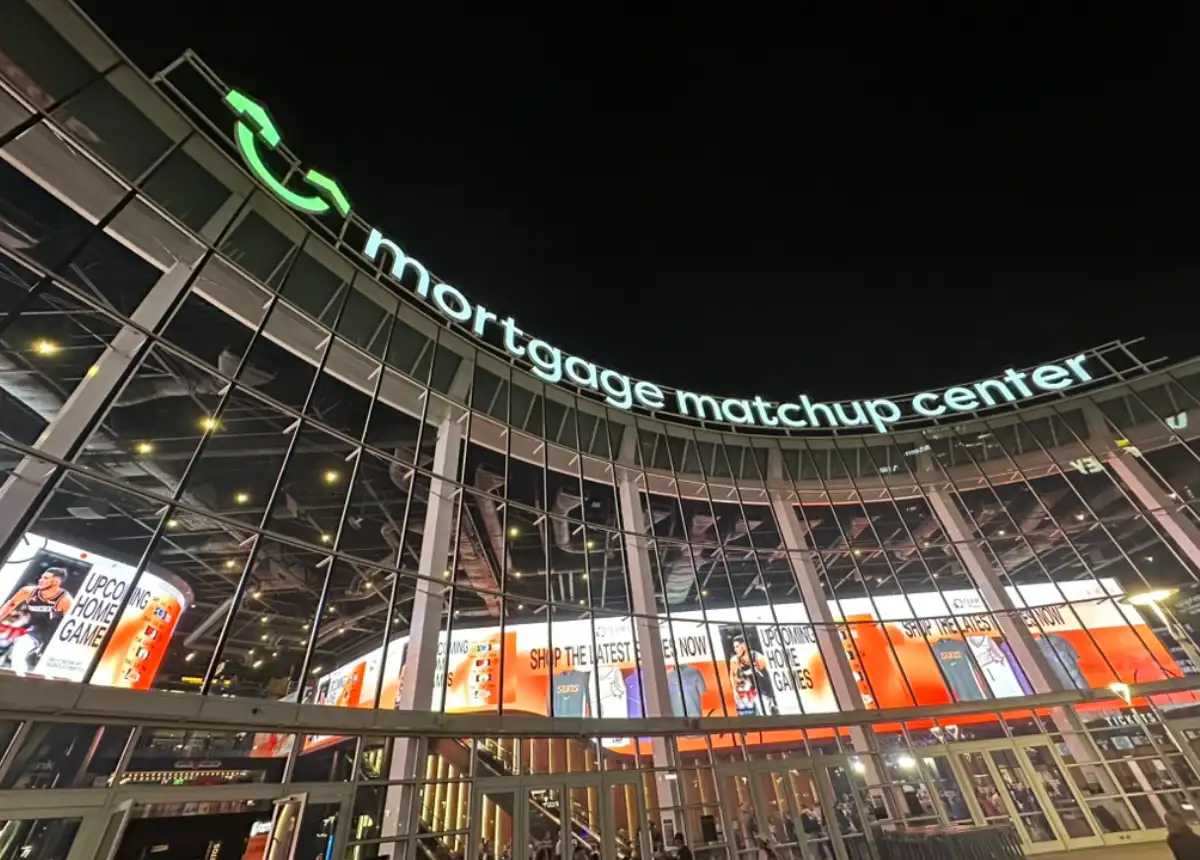
Mortgage Matchup Center Downtown PHX
Photo provided by Metro Phoenix Alliance.
A Centralized Downtown
Downtown Phoenix would empty out after office workers returned home each evening. Today, major investments in sports, entertainment, housing, and hospitality have transformed the area into a thriving urban district. Key projects launched in the early 2000s included the expansion of the Phoenix Convention Center, development of entertainment venues, and upgrades around Chase Field. New multifamily housing developments also brought more full-time residents downtown, creating steady activity beyond traditional business hours.
City leaders and developers continue pushing new projects that expand the downtown arts, entertainment, and hospitality scene. Upcoming developments include the new ASU Health headquarters, renovations to Chase Field, and continued growth in the Warehouse District. Developers also plan to build the Atari Hotel, a gaming-inspired hotel featuring esports, nightlife, restaurants, retail, and immersive entertainment experiences. Strong planning, creative investment, and rising residential demand have helped Downtown Phoenix evolve from a quiet business district into a vibrant destination where more people now live, work, and visit year-round.
Just a few decades ago, Downtown Phoenix became a ghost town after office workers commuted back to the suburbs. Today, investments across multiple sectors have turned Downtown Phoenix into a vibrant community at all hours for all ages.
While there was some transformation that started in the late ’80s and early ’90s, the plan that truly shifted downtown was largely driven in 2004 by Mayor Phil Gordon, which led to the development of America West Arena (now Mortgage Matchup Center). This development was the first push needed for the rise of returning activity to downtown and to blaze a path for other projects to follow, such as the redevelopment of the Phoenix Convention Center and Chase Field.
These three major developments encouraged about 7 million visitors each year to this abandoned city and reshaped Downtown Phoenix’s skyline and city-living ethos.
“People want to come here because there are things to do — and there are things to do because people are living here. That makes more people want to come and live here because there are more things to do,” says Ed Zuercher, city manager for the City of Phoenix.
“And then you just build and build.”
Downtown living
One of the reasons everything in Downtown Phoenix seemed to grind to a halt after 5 p.m. in the past was the simple fact that very few people called the district home. But in recent years, new multifamily developments have changed this dynamic, adding more full-time residents attracted to the urban lifestyle.
For example, Sol Modern is a new, 29-story luxury apartment high-rise in Downtown Phoenix, spanning an entire city block in the Roosevelt Row area. This project — a finalist in AZRE’s RED Awards — is the largest multifamily tower in the area offering 747 high-end studio, one-, two- and three-bedroom units. At the street level, Sol Modern brings 30,000 square feet of retail to the neighborhood.
Just a short walk away is The Maeve Central station and ANOVA Central Station, reimagining the former Greg Stanton Central Station transit depot. The winner of the Mixed-Use Project of the Year at AZRE’s 20th annual RED Awards, this $256 million redevelopment offers more than 30,000-square-feet of street-level retail and is anchored by two architecturally striking towers: The Maeve Central station, rising 33 stories, and ANOVA Central Station, a 22-story building with dedicated students housing. Together, they deliver 338 residential units, 629 student beds and 7% workforce housing.
“We recently completed those projects, and they drastically change the skyline and vibe of downtown,” explains Jimmy Tometich, executive vice president at Layton Construction. “It fits into what’s happening down there to make the area more vibrant than it was a decade ago.”
Andrew Geier, executive vice president at Layton Construction, adds that project like these helps Downtown Phoenix feel more cohesive, bringing value to both local businesses and residents.
“These are really unique spaces that allow for all different types of folks to gather,” he continues. “At the very least, it provides the opportunity for people to be more connected.”
Part of the allure of downtown living is the proximity to arts and culture, but residents of Rainbow Road don’t need to go far to experience creative expression. A finalist in the 2026 RED Awards, Rainbow Road takes architectural inspiration from the Mario Kart video game series.
At the street level, Rainbow Road brings more than 6,000 square feet of retail and a public-facing outdoor space to Roosevelt Row and 36 units with one-, two- and three-bedroom configurations. The five-story building sports a bold, black exterior composed of irregular parallelograms across 12 angled facades.
Surrounding the project is a sidewalk art overlay that draws upon Rainbow Road’s vibrant color palette, along with custom bike racks and benches that keen-eyed observers will notice mimic the racetrack’s shape.
Zac Cohen, creative director at räkkhaus, explains that architecture does not always have to be serious.
“I feel that when you live somewhere — whether it’s for a six-month lease or a home you spend the rest of your life in — having a sense of pride and belonging is one of the most important aspects,” he continues.
Building on success
Building in a busy urban environment comes with added complexity, meaning that transforming an area like Downtown Phoenix takes both time and planning. Zuercher notes that changes are indeed coming — including the addition of the ASU Health headquarters, renovations to Chase Field and the continued redevelopment of the Warehouse District.
With more cultural events happening downtown, developers are paying close attention to the demand for hotel rooms. One unique project set to break ground late this year is The Atari Hotel, inspired by the legacy of the trailblazing video game company.
Spearheaded by Intersection Development in partnership with GSD Group, the hotel promises an immersive environment that merges gaming, music and nightlife — complete with an event center, esports venue, restaurants, retail space and a pool. Designed by räkkhaus, The Atari Hotel is slated for 19 suites and 72 rooms across 90,000 square feet.
Cohen explains that the project takes a world-building approach with the goal of immersing guests in the world of ’80s video. The building’s architecture takes design cues from Atari games and era-defining movies such as “Tron” and “Blade Runner” to add a memorable, one-of-a-kind experience to the downtown area.
Cohen hopes that others will be encouraged to build creatively audacious projects in the city’s art districting, adding that The Atari Hotel should be see as “a catalyst for other developers to try to do something more than just maximize the amount of square footage.”
Thanks to a strong vision and careful planning, Downtown Phoenix has shed its reputation as lunch destination for working professionals into a dynamic arts and entertainment district that more people call home each year.
“We aren’t quite a 24/7 destination yet,” concludes Devney Majerle, president and CEO of Downtown Phoenix Inc., “but we’re absolutely working toward that.”
About Downtown Phoenix Inc.
Downtown Phoenix Inc. is a community-building organization that promotes the revitalization, economic development, and cultural vibrancy of Arizona’s urban center that is Downtown Phoenix. Operating as a partnership between businesses, community groups, and the City of Phoenix, it connects local stakeholders to make the city core an inviting place to live, work, and play.
Share...






Related Posts
Related Posts